
Category: (5)

Institutional property management team reviewing a commercial portfolio in a Montreal boardroom

Managing a multi-unit trust property in Montreal without audit-ready reporting leaves trustees open to severe personal liability. When regulatory audits occur, missing maintenance logs or unverified ledger entries can result in costly legal disputes.

At this scale, institutional property management Montreal is the system that secures commercial, industrial, and residential trust portfolios under strict fiduciary standards. Qualified managers coordinate all physical maintenance, rent collection, and bookkeeping to keep operations smooth and fully compliant. This specialized management ensures that every transaction is documented, aligning with provincial legal standards outlined by the Government of Quebec for administrating third-party property. By delegating these complex daily operational duties to an experienced firm, trustees, wealth managers, and risk committees gain complete peace of mind. They can focus on high-level strategy and asset growth, confident that their physical assets remain safe, highly profitable, and always ready for any regulatory audit.

Fulfilling these strict fiduciary duties requires a clear, deep understanding of the specialized services and high standards involved in Quebec. To help your organization navigate these complex legal requirements, we must first address the foundational question: What Is Institutional Property Management? The path begins with

Request a proposal for institutional property management Montreal today. Call PGK Realty Services at (514) 931-5111 to protect your trust portfolio.

What Is Institutional Property Management?

Large real estate assets need a high level of care. Basic care plans often fall short when a trust or a bank owns a site. This is where institutional property management Montreal services are needed. This work goes far beyond normal landlord duties.

Defining fiduciary-grade real estate oversight

This service offers full care for assets, meeting strict rules set for trusts and banks. Since 1986, PGK Montreal has provided this type of elite work in Quebec. The firm handles all rent collection, books, repairs, and site checks. This means that trust officers and fund managers do not have to worry about daily asset details. Standard managers often work with single landlords and focus on short-term tasks. In contrast, a fiduciary manager works with estate planners, trust groups, and risk boards. They must act with absolute honesty and care. Their focus remains on long-term safety and asset value. Trust officers, wealth managers, and risk committees rely on these services. They need clear reports and strict oversight to do their jobs. A standard manager may lack the tools to provide this depth. An institutional firm provides the needed structure to fit auditors and trustees alike.

The scope of institutional property portfolios

This model covers diverse portfolios of real estate, which can include large housing blocks, office buildings, and industrial sites. Each asset type has its own set of rules and needs. A commercial site requires expert leasing and tenant care. At the same time, an industrial plant needs regular safety checks. Portfolios can range from multi-unit apartment complexes to large industrial parks, each with distinct maintenance needs. For instance, commercial office towers need regular HVAC checks and parking lot upkeep. Industrial sites might require strict safety and waste checks. Managing all three areas under one plan makes work easy for institutional owners. Managing these mixed holdings demands a broad skill set that a single manager cannot handle alone. Instead, a full-service firm brings in a skilled team. This team handles everything from booking rent to fixing major leaks. They keep the properties running without gaps.

How modern asset management is evolving

Today, the sector faces new trends in governance. Fiduciaries can no longer just look at next month’s cash flow. There is a growing need to take a longer and more systemic view of fiduciary obligations. This means planning for the future of each asset. This forward-looking approach helps cut risks for trust funds and pension boards, ensuring that buildings remain compliant with shifting city laws. Managers must track energy use and safety codes. By taking a wide view, they protect the long-term value of the assets. This proactive care keeps the holdings safe for years to come.

How Institutional Property Management in Montreal Meets Fiduciary Standards

Fiduciary standards guide how institutional property management in Montreal works. These rules make sure that managers handle real estate portfolios with the highest level of care. Many financial trusts seek institutional property management Montreal partners to handle their portfolios. Professional firms must align their actions with strict local laws and academic standards. This alignment builds trust and keeps portfolios safe over time.

Core duties under Quebec law

In Quebec, a property manager operates as a legal mandatary. This role comes with strict duties. According to the Quebec government, a mandatary must manage property with prudence, diligence, honesty, and loyalty. This means the manager must be fair and transparent in every deal. They cannot hide costs or make secret profits. Every choice must serve the owner’s goals.

Prudence needs systematic care. A manager must track all building systems and check them often. Diligence means responding to maintenance issues fast. Honesty and loyalty mean putting the client’s interests first. In Montreal, a bilingual firm can deliver these duties to both English and French owners. This dual skill makes sure that both sides understand each other.

Acting in the best interests of asset owners

Fiduciary standards demand that managers make choices in the best interests of the asset owner. This duty is central to Quebec civil law. Under local rules, a mandatary must respect the rights and autonomy of the mandator. They must also take into account the owner’s preferences and wishes. This rule keeps managers from imposing their own plans on a portfolio.

To meet this duty, professional firms use open systems. They give clear paths for communication and approval. This setup makes sure that trust officers and wealth managers stay in control. By keeping owners informed, a firm respects client wishes while handling the daily burdens of ownership. Owners get full transparency without the stress of managing daily building issues.

A long-term systemic view of property assets

Fiduciary duties are changing. Today, there is a growing recognition that institutional managers must take a longer-term and more systemic view of their obligations. This idea comes from Canadian fiduciary law. This is true for pension funds and trusts that hold real estate. Property assets are not short-term trades. They are long-term investments that need careful, ongoing care to keep their value.

Taking a systemic view means looking at the whole picture. Managers must plan for future building repairs and energy needs. This long-term approach helps trustees address and mitigate liability. By preventing small issues from becoming big problems, a firm protects the estate from sudden costs. This careful planning makes sure that the real estate portfolio remains sound for future beneficiaries.

Audit-Ready Reporting: The Financial Backbone of Institutional Management

Institutional property portfolios require strict financial control to protect assets and satisfy trust needs. Property managers must keep complete records to satisfy trusts, estates, and financial groups. Clear financial reports are the backbone of this work. They protect the estate value while keeping all stakeholders informed.

To manage assets with care, teams use professional Montreal property management services to run daily tasks. Experienced firms handle rent collection, tenant management, and bookkeeping with high precision. They also oversee maintenance coordination and regular property inspections. These steps keep accounts balanced and ensure the property remains in top condition.

Legal mandates and rendering of accounts

In Quebec, a mandatary managing a property has a clear duty to report. This report is called a rendering of accounts. Legal guidelines on the roles and responsibilities of a mandatary state this document must show how the property is run. The mandatary must submit this report as often as the mandate or the court requires.

The law now makes these reports required for new agreements. Any protection mandate signed on or after November 1, 2022, must include a clause on this reporting. This clause must state exactly how and when the mandatary will report. These rules ensure that all parties have a clear view of property decisions and financial changes.

Each report must reflect the best interests of the asset owner while respecting their rights and autonomy. Fiduciaries must track each single expense and decision with extreme care. This includes detailing rent collection, vacant inspections, and building repairs. Pristine reports ensure that the mandatary remains fully transparent and fair during their administration.

Periodic management reports for portfolio transparency

Regular reporting helps keep estate administrators and trust officers aligned. The Curateur public suggests using a standard form for a periodic management report to help with these tasks. Standard forms make sure that all asset details are clear and consistent. They allow managers to track changes in property value and operational expenses over time.

These periodic reviews show how active management helps protect the long-term value of the estate. Professional oversight gives trusts and financial groups full peace of mind. Managers handle the hard daily work so that estate officers do not have to worry about small details. Whether managing apartment buildings, office spaces, or industrial sites, these reports keep stakeholders informed.

Sustaining compliance through external audits

Fiduciary standards are rising across Canada. Research from the Canadian Bar Review shows that fiduciaries face greater pressure to show strong oversight. Managers must keep clean files to meet external audits, ensuring every receipt links to a verified deal. Clear records protect assets and shield estate officers from risk.

Risk Management and Compliance Protocols for Institutional Portfolios

Managing large portfolios in Quebec needs strict risk controls to protect real estate assets from loss. To keep assets safe, risk teams want clear, written steps for daily tasks. This is why institutional property management Montreal uses set paths. These formal systems manage rent collection, building repairs, and site inspections. Having set plans for these tasks helps firms avoid costly gaps.

Compliance is not a one-time check. It is a daily process that needs constant watch. In a busy market like Montreal, local laws and building codes can change fast. An expert team keeps track of these changes so you do not have to worry. This active oversight keeps the property in line with all rules and cuts down on liability for the owners.

Documented operational control systems

Daily oversight is more than just regular upkeep. Large real estate holdings need active care to maintain value. Gaps cost money. A critical part of risk control is being able to respond to emergencies fast. True protection means having a 24-hour superintendent on site or a round-the-clock emergency team. This ensures that leaks or safety issues are fixed before they cause big losses. Prompt action protects the building from water or fire damage.

Written systems also protect cash flow. Steady rent collection keeps the property running smoothly. Clear rules for tenant management make sure payments are made on time. When issues arise, having a clear plan ensures they are resolved without delay. This steady care keeps the building in top shape and protects the bottom line.

Required property inventory timelines

Compliance in Quebec also has strict legal rules for new managers. When a firm takes over an asset, it must create a full list of all real property. Under Quebec law, a manager must conduct an inventory of property within 60 days of assuming responsibility. This legal duty gives full transparency from day one. It gives the owner a clear record of all assets. Missing this deadline can lead to legal issues and big risk for the trust. An expert firm makes sure this list is made fast and done right.

Fiduciary liability mitigation strategies

Risk committees for pension funds and trusts face growing pressure to manage assets with care. Fiduciaries must guard against operational and legal threats. To protect their funds, trustees must mitigate liability in respect of these duties by hiring expert managers. Working with a seasoned partner cuts risk. It shows that the fund has taken prudent steps to manage its holdings. Clear reports and written systems give the proof needed for audits. This strict path keeps institutional portfolios safe and compliant.

How Does Institutional Property Management Differ from Private Ownership?

Managing real estate for a trust or financial group is not like managing properties for a single owner. To find the right institutional property management, Montreal asset managers must compare professional firms with standard private operations. The scale of the work and the legal duties are much larger. Professional firms must meet high standards of care to protect the value of these assets.

Core differences in operations

A private landlord often handles tasks with informal systems. They might use basic spreadsheets or simple text messages to track rents and repairs. In contrast, institutional teams use strict, written rules. This ensures every move is clear and easy to track during audits.

Fiduciary duties for large holdings are also changing. They require a long-term, full view of risk and legal issues to protect the assets. This shift is discussed in detail in studies on fiduciary duties in Canadian law. Because of these duties, a manager cannot just fix problems as they arise. They must use clear, set systems to avoid risks and keep the property in top shape.

Feature Institutional Management Private Ownership
Reporting Cadence Regular, scheduled reports. Rare or as-needed updates.
Governance and Oversight Strict checks by trust officers. Direct control by one person.
Risk Documentation Full written files for all safety checks. Few written records of repairs.
Compliance Burden Must meet all local and provincial laws. Lower focus on complex legal rules.
Service Model Full or chosen management options. Fixed, all-or-nothing service.

Custom service and pricing structures

Large groups and trusts have diverse needs. Some need a firm to handle every single task from rent collection to leasing. Others only need help with bookkeeping or complex upkeep tasks. To meet these needs, professional managers offer both complete management and chosen or partial management options. This lets clients choose the exact level of support they need to ease their daily burdens.

Pricing for these services is also not fixed. Set property management fees do not work well for large, complex holdings. Instead, firms use proposal-based pricing. They build a custom bid for each client based on the size of the estate and the exact tasks needed. This ensures the pricing is fair and matches the work needed.

Why Do Financial Institutions and Trusts Choose PGK Realty Services?

Fiduciary-grade real estate oversight

Financial institutions and trusts face unique demands when managing property portfolios in Quebec. They require fiduciary-grade management that focuses on strict compliance, clear reporting, and careful oversight. Since 1986, PGK Realty Services has provided expert institutional property management Montreal services. We handle the day-to-day operational burdens so trust officers and wealth managers do not have to worry about minor details.

Trusts must protect their real estate assets with extreme care to maintain value. Under Canadian law, fiduciary duties require taking a longer and broader view of property management. This high standard is highlighted by the Canadian Bar Review, which tracks evolving fiduciary standards for institutional trustees. PGK Realty Services delivers this precise level of care across residential, commercial, and industrial portfolios.

Cross-border investment solutions

Many Montreal properties belong to global investors who need local oversight. Owners based in countries like France, Germany, England, Hong Kong, and the Bahamas require local experts who understand cross-border real estate rules. PGK Realty Services has decades of experience serving these global clients with complete transparency. We set up custom plans to manage risk, track local laws, and keep buildings in top shape.

Foreign estate managers often struggle with local tenant rules in Quebec. We bridge this gap by offering both complete management and selective property plans. Our team inspects vacant spaces and handles tenant needs directly. This diligent care ensures that assets remain secure even when the owners live thousands of miles away.

Bilingual professional service since 1986

To meet strict local standards, PGK Realty Services offers full bilingual service in English and French to ensure clear communication with tenants, courts, and vendors. This thorough approach matches the legal duties defined by the government of Quebec. Under provincial rules, a mandatary must manage property with prudence, diligence, honesty, and loyalty. Our bilingual team respects these guidelines in every deal we manage.

We do not use fixed rates or rigid service models. Instead, our pricing is proposal-based to suit the unique scale of each trust or financial portfolio. We build custom service proposals to match your exact oversight needs. Contact our team today to request a custom proposal for your real estate assets in Greater Montreal.

Get a proposal for your institutional property portfolio. Contact PGK Realty Services at (514) 931-5111 to begin.

Frequently Asked Questions About Institutional Property Management

How often must an institutional property manager render accounts under Quebec law?

Under guidelines from the Government of Quebec, protection mandates signed on or after November 1, 2022, must have a clause on rendering accounts. The frequency of these reports is set in the mandate itself or by a court. Managers must submit regular, routine reports detailing all financial and building actions. This process ensures full clarity for trust officers and estate managers.

How quickly must a property manager complete an asset inventory in Quebec?

A property manager must complete a full inventory of all real estate assets within 60 days of assuming the role. This 60-day limit is a legal rule in Quebec designed to protect the owner’s property. The inventory must detail the condition and financial records of every building. This establishes a clear baseline for future audits and reporting.

How are institutional property management fees structured in Montreal?

Institutional property management fees in Montreal are structured through custom, proposal-based pricing. Because trusts, financial institutions, and international investors have highly diverse real estate portfolios, standard flat fees do not apply. Instead, a custom proposal is developed based on the specific asset class, portfolio size, and level of management needed. This ensures that you only pay for the exact services your mandate needs.

Can international investors access institutional property management in Montreal?

Yes, international real estate investors can fully access institutional property management in Montreal. Skilled local firms handle all daily tasks for owners who live abroad, including those in France, Germany, the United Kingdom, Hong Kong, and the Bahamas. These services cover local operations, tax reporting, and bilingual compliance, making it easy to own Montreal property without being on-site.

Ready to request an institutional property management proposal?

Leaving Montreal real estate assets without expert care can lead to serious compliance issues and costly repair bills. Trust assets need constant daily care to keep their value and lower your risk. Our bilingual team has served Montreal since 1986, managing residential, commercial, and industrial sites. Starting our management plan today protects your assets and meets all local legal rules. We handle the daily workload so your officers do not have to worry about rent, upkeep, or paperwork. This lets your team focus on other vital work. Partnering with us removes the daily stress of property care and gives your group peace of mind.

Ready to request a proposal? Call (514) 931-5111 to request a proposal for institutional property management.


Property manager and developer reviewing a newly built Montreal apartment building at dusk

A new-construction rental project does not become operationally simple when the final unit is delivered. Lease-up, tenant onboarding, warranty coordination, maintenance systems, inspections, and financial reporting must work together from the outset.

For developers and owners, build to rent Montreal property management means coordinating the transition from completed construction to a stable, well-run rental asset. The right partner supports leasing, tenant management, bookkeeping, maintenance coordination, and inspections while protecting the owner’s long-term objectives.

PGK Realty Services has served Greater Montreal property owners since 1986 and provides bilingual, institutional-grade support for residential portfolios, including build-to-rent and new-construction properties. A structured management approach can give owners clearer oversight while transferring day-to-day operational demands to an experienced team. That starts with understanding how this model differs from conventional rental ownership.

Request a proposal for build-to-rent property management in Montreal.

What Is Build-to-Rent in Montreal?

Build-to-rent, commonly abbreviated as BTR, describes a residential development designed and built specifically for long-term rental rather than individual condominium sales. The developer or investment owner typically retains the property as a unified asset. Allowing the building, resident experience, leasing strategy, and operating standards to be managed as one portfolio.

That model differs from a conventional apartment project only in its ownership and operating intent. In BTR, management is considered early in the development process because lease-up, maintenance systems, resident communication, inspections, and financial reporting all influence the performance of the completed asset. The objective is not simply to fill units. It is to establish a durable operating platform that supports occupancy, tenant retention, asset protection, and informed investment decisions.

Montreal’s rental market is attracting new institutional attention

Recent market conditions help explain the growing interest in purpose-built rental housing. According to Canada Mortgage and Housing Corporation (CMHC), Canada’s rental vacancy rate increased from 2.2% in 2024 to 3.1% in 2025, alongside record-high purpose-built rental construction. CMHC also reported that Montreal rents rose 7.2% in 2025, while vacancy increased for both purpose-built and condominium rentals. Affordability remained a challenge.

CMHC further reported that Canada’s purpose-built rental stock rose 3.1% in 2025, above the 10-year average. These figures do not guarantee the performance of any individual Montreal project, but they illustrate a market receiving substantial development activity and investor attention. Source: CMHC rental market data.

Why the BTR model requires an operating strategy

A new rental community creates a concentrated set of decisions. Developers must prepare for initial lease-up, establish consistent tenant screening and onboarding, coordinate maintenance responsibilities, and create reliable reporting before the building reaches stabilized operations. Decisions made during this phase can affect resident satisfaction and the owner’s ability to evaluate the asset.

Build-to-rent Montreal property management therefore extends beyond routine administration. It connects the physical building with the financial and resident-facing systems that keep a rental portfolio functioning. A management partner may coordinate leasing, inspections, bookkeeping, tenant management, and maintenance while maintaining clear communication with owners and development teams.

For institutional investors and developers, the appeal is operational clarity. A retained rental asset can be managed against defined standards rather than divided among individual unit owners. That structure supports consistent service, centralized oversight, and a clearer transition from construction completion to long-term ownership. In Montreal, bilingual communication and familiarity with local operating requirements are also important considerations when selecting the management framework.

What Build-to-Rent Property Management in Montreal Covers

Build-to-rent management extends well beyond collecting rent. It coordinates the operational, financial, and resident-facing work required to keep a purpose-built rental asset stable as it moves from initial occupancy into ongoing operations. PGK Realty Services provides a comprehensive scope that includes maintenance coordination, leasing, inspections, tenant management, and bookkeeping.

Leasing and Marketing

For a new build-to-rent community, leasing begins before every unit is fully operational. Property management can support initial property marketing, prospective-tenant communication, application handling, lease preparation, and tenant onboarding. The objective is a controlled lease-up process that supports occupancy while maintaining consistent standards for the community.

Once the building is operating, property leasing remains an ongoing responsibility. The management team coordinates listings, responds to inquiries, schedules visits, and helps owners manage turnover. This creates continuity between the initial lease-up and the long-term operation of the asset.

Tenant Management, Rent Collection, and Bookkeeping

Tenant management makes the property manager the primary operational contact for residents. This includes handling repair requests, communicating relevant building information, and supporting compliance with lease terms. Clear protocols help ensure that resident issues are documented and directed to the appropriate person.

Rent collection is paired with rigorous bookkeeping and accurate income and expense tracking. Owners receive a clearer view of the asset’s operating position, while financial institutions and trusts can maintain the professional reporting and visibility expected of institutional-grade management. PGK’s bilingual English and French service can also help support owners and residents across Montreal’s diverse market.

Maintenance, Building Inspections, and Vacant-Unit Inspections

Maintenance coordination includes receiving requests, organizing qualified service providers, following up on work, and keeping building needs moving toward resolution. Proactive building inspections help identify maintenance issues before they develop into more costly repairs. For high-density residential buildings, superintendent protocols and 24-hour emergency response provide an established path for urgent needs.

Vacant-unit inspections address a different operational risk. Regular checks can help identify damage, maintenance concerns, or security issues while an apartment is unoccupied. Together, building inspections and vacant-unit inspections give owners a more consistent view of physical conditions across the property.

This full-service approach allows developers, investors, and institutions to assign day-to-day execution to an experienced management partner while retaining visibility over the asset. The precise scope, authority limits, reporting requirements, and pricing should be defined in a custom management proposal.

Navigating the Initial Lease-Up of New Construction

The initial lease-up is the point at which a new-construction rental asset begins converting capital investment into operating performance. The objective is not simply to fill units quickly. It is to establish a disciplined leasing process, attract suitable residents, protect the positioning of the property, and move toward stabilization without allowing preventable vacancy to accumulate.

Begin marketing before completion

Pre-marketing should begin while construction is approaching completion, subject to the project’s readiness and applicable requirements. A coherent launch plan can define the target resident profile, unit positioning, amenities, availability dates, showing process, and leasing materials before the first units are ready for occupancy.

Pricing should be based on the asset’s location, unit mix, finishes, services, and competitive context. It should also remain flexible enough to respond to leasing velocity. A price that is set once and left untouched can slow absorption, while indiscriminate discounting can weaken the property’s long-term positioning. Regular reporting allows the owner and manager to review inquiries, applications, signed leases, upcoming availability, and vacancy exposure before adjustments become urgent.

Coordinate leasing with onboarding and stabilization

Tenant targeting is equally important. Screening and lease administration should follow consistent criteria, clear documentation, and a process aligned with local landlord-tenant requirements. Professional management helps owners navigate those regulatory obligations throughout the lease-up, rather than treating compliance as a final administrative check.

Once a lease is signed, onboarding should be organized around a reliable move-in experience. Residents need timely communication, complete lease information, access instructions, building rules, service contacts, and a clear method for reporting maintenance concerns. This early interaction establishes expectations and helps management identify issues while the building is still being stabilized.

Minimizing vacancy requires close coordination between marketing, construction, inspections, leasing, and operations. Unit readiness should be confirmed before possession dates are promised, and any defects or service interruptions should be routed quickly to the responsible parties. Maintenance coordination, tenant management, and inspections are established components of PGK’s service model. Its multi-family property management approach can help connect the launch plan with the daily operating requirements that follow.

For developers and institutional owners, the lease-up process should produce more than occupancy. It should create a dependable operating foundation, with documented decisions, visible leasing performance, and a resident experience capable of supporting the asset through stabilization.

Warranty Coordination and Building Systems Handover

New-construction rentals require disciplined oversight after the keys are delivered. The warranty period is an operational phase, not an administrative footnote. Heating, ventilation, plumbing, electrical, access, and life-safety systems must be observed in use, documented carefully, and handed over with clear accountability.

Turn warranty obligations into a managed workflow

A property manager can establish a warranty register that records each system, manufacturer, installer, coverage period, service contact, required maintenance, and outstanding deficiency. This gives the owner a working reference instead of a collection of manuals and invoices.

Tenant reports, superintendent observations, commissioning documents, and contractor visits should feed the same record. When a recurring HVAC fault or plumbing issue appears, the management team can identify the responsible party. Preserve supporting evidence, and coordinate access without losing time between the resident, builder, and subcontractor. Repair authority and vendor-selection limits should also be defined in the management agreement before the building becomes operational.

This approach is especially important for owners seeking apartment building management that protects both resident experience and asset performance. Warranty claims are easier to advance when the issue, date, location, impact, and attempted correction are documented consistently.

Stabilize systems through structured inspections

Early inspections should combine scheduled building reviews with responsive checks after tenant move-in. The process can cover temperature control, ventilation, water pressure, drainage, electrical fixtures, common-area equipment, doors, elevators, and visible signs of moisture. Each observation should be assigned a priority, owner, due date, and verification step.

Proactive inspections help identify maintenance issues before they become costly repairs. They also reveal whether a system is functioning reliably under real occupancy rather than only during a pre-handover demonstration. For high-density residential buildings, superintendent protocols and 24-hour emergency response provide an escalation path when a failure threatens habitability or security.

The handover is complete only when open deficiencies, warranty contacts, maintenance schedules, operating procedures, and inspection records are accessible to the ongoing management team. That continuity supports longer system life, clearer reporting, and greater peace of mind for owners during the transition from construction to stabilized operations.

New Construction vs Existing Stock: What Changes in Management

Both asset types require disciplined leasing, maintenance, tenant service, and reporting. The operating emphasis differs, however. New-construction BTR properties require active coordination during lease-up and systems stabilization. Existing buildings require sharper attention to accumulated wear, recurring repairs, and the operating history of the asset.

New-construction and existing-stock management priorities
Management factor New-construction BTR Existing stock
Building systems, age, and warranty Systems are new but may require commissioning, handover documentation, defect tracking, and coordinated warranty follow-up during stabilization. PGK identifies new-construction management and system stabilization as specialized requirements. Operating decisions depend on the condition, age, service history, and remaining useful life of existing systems. Records and preventive maintenance planning become central.
Lease-up and stabilization Marketing, leasing, tenant onboarding, and early occupancy management are concentrated priorities. The objective is to reduce avoidable vacancy while establishing reliable operating routines. Leasing is usually continuous rather than concentrated. The focus shifts toward renewal planning, turnover control, and maintaining occupancy through consistent service.
Maintenance and inspection intensity Frequent inspections help identify construction deficiencies, clarify responsibility, and protect the building before minor issues affect residents or operating performance. Inspections prioritize early detection of deterioration, recurring failures, and deferred maintenance. High-density buildings may also require superintendent and emergency-response protocols.
Tenant profile Early residents experience a newly delivered community, so communication, onboarding, amenity orientation, and prompt issue resolution shape confidence in the asset. Residents may have varied tenure and expectations shaped by the building’s established routines. Consistency in repairs, lease administration, and communication supports retention.
Technology and pre-leasing Digital leasing workflows, pre-leasing coordination, access systems, and resident communication tools should be tested before and during opening. Technology decisions must account for existing infrastructure, resident adoption, vendor compatibility, and whether upgrades justify their cost and disruption.
Reporting needs Reports should track lease-up progress, occupancy stabilization, outstanding deficiencies, warranty matters, and early operating variances. Reports should emphasize maintenance trends, capital needs, operating variances, renewals, arrears, and the condition of the established asset. Institutional owners may require fiduciary-grade reporting and compliance visibility.

The distinction is operational, not absolute. A new building still needs long-term preventive maintenance, while an established property may undergo a major repositioning or technology upgrade. The management plan should therefore reflect the asset’s delivery stage, physical condition, ownership objectives, and reporting requirements.

Tenant Placement and Long-Term Value in Build-to-Rent Communities

Tenant placement is not simply an occupancy exercise. The quality of screening, onboarding, and day-to-day service influences payment consistency, resident satisfaction, maintenance outcomes, and the reputation of the community.

Selection that supports asset stability

A disciplined process begins with clear leasing criteria, consistent application review, appropriate screening, and documented communication. It should also respect applicable landlord-tenant requirements at every stage. Standardized tenant management and rent collection protocols help create more predictable administration and cash flow.

For a new community, onboarding deserves particular attention. Residents need practical guidance on building systems, access procedures, maintenance requests, and community expectations. A responsive point of contact can resolve issues before they become recurring sources of dissatisfaction. PGK coordinates leasing, tenant management, bookkeeping, inspections, and maintenance as part of its residential property management services.

Retention through responsive community management

Retention is supported by operational consistency rather than superficial amenities alone. Timely repair coordination, clear lease communication, and visible care for shared spaces help residents feel that the property is being managed responsibly. In higher-density buildings, superintendent protocols and 24-hour emergency response provide an established route for urgent needs.

Proactive inspections also help protect the resident experience and the physical asset. Identifying maintenance issues early can reduce disruption, preserve building systems, and support a community standard that attracts suitable applicants during future leasing cycles. These practices complement a broader Montreal property management services strategy for owners who are not managing locally.

Connecting resident performance to investment objectives

Long-term value depends on more than filling units at launch. Owners need visibility into leasing activity, collections, operating costs, maintenance patterns, and emerging risks. Rigorous bookkeeping and professional reporting give financial institutions and trusts the information needed to monitor performance against fiduciary expectations.

This visibility is particularly important for international investors from France, Germany, England, Hong Kong, or the Bahamas. Bilingual English and French management can reduce distance and language barriers while keeping local operations accountable. PGK has served property owners since 1986 and provides institutional-grade care for Montreal residential assets.

When tenant placement, retention, maintenance, compliance, and reporting operate as one system, a build-to-rent asset is better positioned for durable ROI and appreciation. The objective is not a short-term occupancy milestone. It is a stable, well-maintained community that remains investable over its full operating horizon.

Request a proposal to discuss build-to-rent property management in Montreal for your new-construction rental property.

Frequently Asked Questions

What is build-to-rent property management in Montreal?

It is the coordinated operation of a purpose-built rental asset on the owner’s behalf, from initial marketing and lease-up through tenant management, maintenance, inspections, rent collection, and bookkeeping. For a new-construction community, the approach also includes stabilizing occupancy, coordinating building systems, and establishing reliable operating procedures from the outset.

How does professional property management benefit new-construction rental properties?

Professional management gives the owner an operating structure during the transition from construction completion to stabilized occupancy. The manager can coordinate leasing and tenant onboarding, organize maintenance responses, monitor building conditions, and help address warranty-period issues before they become larger operational problems. This allows the development team and ownership group to maintain focus on investment performance while day-to-day responsibilities remain accountable and documented.

What should owners clarify before appointing a Montreal property manager?

Owners should define the management scope, reporting obligations, compensation, duration, termination provisions, and authority limits for repairs, vendors, and legal action in the written agreement. These points are identified as important elements of a management agreement by the North Carolina Real Estate Commission. Institutional owners should also confirm how budgeting, compliance, owner funds, and performance reporting will be handled.

Can a property manager support investors who live outside Montreal?

Yes. A suitable manager can provide a local point of contact for leasing, tenant matters, inspections, maintenance coordination, and reporting. Bilingual English and French service can also reduce communication friction for international owners and other stakeholders. PGK Realty Services serves property owners in Greater Montreal and has experience supporting international investors and institutional clients.

Ready to Request a Build-to-Rent Management Proposal?

A clear management plan can help align lease-up, tenant service, maintenance coordination, and ongoing reporting with your property’s objectives.

Request a proposal from PGK Realty Services to discuss build-to-rent property management in Montreal and the operational support your new-construction rental property requires. Contact us.

For an investor, a property inspection is not merely a condition check completed before signing. It is an early test of the building’s likely demands on capital, maintenance coordination, tenant operations, and insurance planning. The most useful report helps distinguish an immediate safety concern from a repair that can be scheduled and budgeted over time.

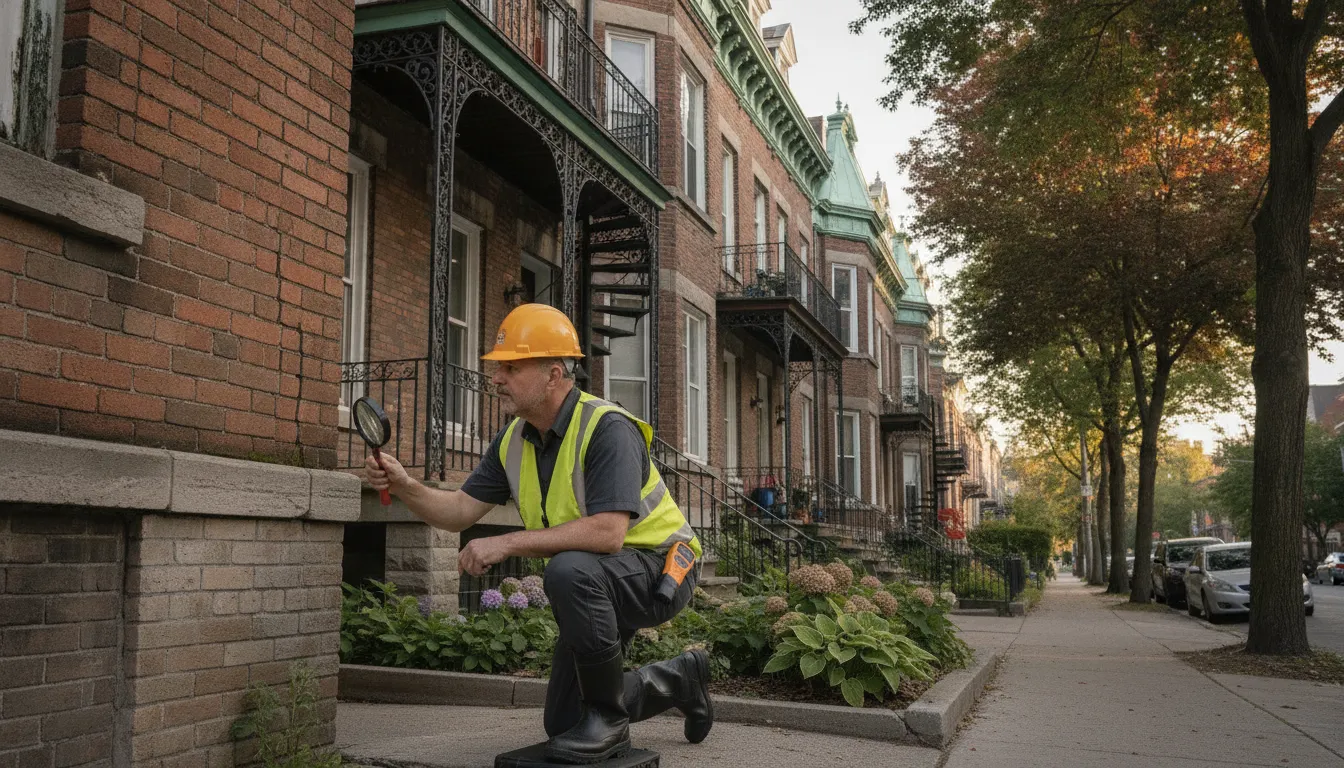
Property inspector and investor reviewing a classic Montreal triplex facade

A pre-purchase property inspection Montreal evaluates the building’s principal components and documents defects, damage, and potential safety concerns before acquisition. For investors, those findings provide a practical basis for estimating near-term repairs, planning ongoing property management, and deciding whether the purchase terms reflect the asset’s true operating requirements.

Canada’s Office of Consumer Affairs recommends reviewing whether an inspection report covers the main systems and includes clear photographs and explanations. In Quebec, the BNQ 3009-500 standard is intended to harmonize residential inspection practices during real estate transactions. The scope, evidence, and limitations of that report matter when translating observations into an ownership plan.

Request a property management proposal to understand how professional property management can support your Montreal investment after the inspection.

What Does a Pre-Purchase Property Inspection in Montreal Cover?

A serious inspection examines the property as an interconnected operating asset, not merely as a collection of visible defects. The review typically considers the building envelope, structural condition, roof, electrical and plumbing systems, heating, ventilation and air conditioning, and other major components that may affect safety, durability, and future ownership decisions.

The building envelope includes exterior walls, windows, doors, visible masonry, drainage details, and other elements that separate the interior from Montreal’s weather. The inspector is looking for signs of water entry, deterioration, inadequate maintenance, or conditions that warrant further investigation. Structural observations may include the foundation, framing, floors, walls, and other accessible components. These observations are not a substitute for specialized engineering or technical assessments where a material concern is identified.

Roofing is assessed for visible condition, drainage, age-related deterioration, and indications of moisture intrusion where accessible. Electrical and plumbing reviews generally focus on observable installation conditions, apparent deficiencies, and the performance of accessible fixtures and systems. HVAC and other major systems are considered from an operating and condition perspective, with limitations clearly identified when equipment cannot be safely or fully tested during the visit.

System. What the Inspector Assesses. Typical Investor Concern.
Building envelope. Exterior walls, windows, doors, masonry, drainage details. Water entry and deterioration that trigger early capital work.
Structure. Foundation, framing, floors, walls, visible settlement patterns. Movement or settlement requiring a structural engineer’s opinion.
Roofing. Visible condition, drainage, age-related wear, moisture signs. Remaining service life and the cost of postponing replacement.
Electrical and plumbing. Accessible installations, apparent deficiencies, fixture performance. Outdated components and renewal requirements in older buildings.
HVAC and major systems. Operating condition and observable performance within stated limits. Replacement exposure that belongs in first-year reserves.

Quebec’s BNQ 3009-500 standard was introduced to harmonize inspection practices for residential buildings involved in real estate transactions. It provides a useful framework for understanding what a properly organized inspection should address. While the actual scope still depends on the property’s configuration, accessibility, season, and the inspector’s stated limitations; the standard does not eliminate the need to read the engagement terms carefully.

What the Written Report Should Include

The report is the inspection’s decision-making record. Government consumer guidance recommends asking for a sample report and confirming that it is understandable, covers the home’s main systems, and includes photographs and explanations. A useful report should distinguish observed conditions from recommendations for additional assessment. Identify safety or performance concerns, and make clear which areas were inaccessible or outside the inspection scope.

For an investor, the most valuable review is not simply a list of deficiencies. It is a structured basis for deciding which items require immediate attention, which belong in planned capital maintenance, and which should be investigated before a transaction proceeds. That distinction helps turn a technical inspection into a more disciplined acquisition and ownership decision.

For the BNQ context, see the Quebec government’s overview of BNQ 3009-500. The Office of Consumer Affairs guidance on home inspections also explains why a written, photo-supported report matters.

Montreal-Specific Issues Every Property Buyer Should Know

Montreal properties must be evaluated in the context of their soil conditions, construction history, and building age. A technically competent inspection does more than identify visible defects. It helps a buyer distinguish between ordinary maintenance, conditions requiring specialist investigation, and risks that may materially affect future ownership.

Foundation Settlement and Clay Soils

Clay soils are common in the St. Lawrence Valley and can present particular challenges for foundations. Because clay may compress or change behavior with variations in moisture and loading, settlement can place stress on foundation walls and other structural elements. The Régie du bâtiment du Québec explains the risks associated with clay soils, including conditions that can contribute to cracking or movement.

During an inspection, the objective is not to diagnose every structural condition from visual evidence alone. Inspectors look for patterns such as stepped or recurring cracks, uneven floors, sticking doors, water infiltration, and signs of prior repairs. Where the findings suggest movement rather than routine shrinkage, the buyer should obtain an opinion from an appropriately qualified structural professional before treating the issue as a standard repair item. That distinction matters when assessing both transaction risk and the capital planning required after closing.

Aging Infrastructure in Older Montreal Buildings

Many Montreal properties have accumulated several generations of building systems. An inspection should therefore examine the condition and apparent serviceability of plumbing, electrical components, roofing, drainage, the building envelope, and other major systems within the scope of the engagement. The report should make clear what was observed, what could not be inspected, and which conditions warrant follow-up.

For an older building, a buyer should read beyond isolated defects. Corrosion, outdated distribution components, recurring moisture, patched roofing, or evidence of deferred maintenance may indicate a broader renewal requirement. The practical question is whether the property can be operated reliably with planned maintenance or whether several systems may compete for capital at the same time. In a multi-unit, commercial, or mixed-use acquisition, that distinction can influence reserves, financing discussions, and the timing of improvements.

How Inspectors Handle Vermiculite and Asbestos

Buildings constructed between 1930 and 1990 may contain asbestos-containing materials, and vermiculite insulation may still be present in some properties. The Gouvernement du Québec advises that potentially asbestos-containing materials should not be disturbed. An inspector may identify suspect materials and recommend further assessment, but sampling, removal, or remediation should be handled by a qualified contractor or certified laboratory as appropriate.

Buyers should not remove insulation, open concealed areas, or conduct informal sampling to resolve uncertainty. The responsible path is to document the location, restrict disturbance, and obtain qualified advice on testing or management. That approach protects occupants, preserves evidence, and gives the buyer a more reliable basis for negotiating conditions and planning future work.

Inspector documenting foundation and exterior conditions of a Montreal triplex during a pre-purchase inspection

How a Pre-Purchase Property Inspection Report Informs Management Costs

An inspection report should be read as an early operating-cost document, not merely as a record of defects. Its findings help an investor distinguish between a property that is operationally manageable and one that requires substantial capital planning immediately after acquisition. The Government of Canada notes that a complete report can inform purchase choices and identify repairs that may need to be addressed, creating a practical basis for both due diligence and negotiation. Read the government guidance on home inspections.

Reading the Report as an Operating Budget

Start by classifying observations according to their likely effect on ownership costs. Deferred maintenance, water infiltration, or deteriorated exterior elements may require attention before they become tenant-facing or operational problems. A roof or building-envelope finding should be considered in relation to its remaining service life, the consequences of postponement, and the possibility of related interior damage. The report may not provide a contractor’s quotation or a final lifecycle forecast, but it can identify where those investigations belong in the first-year plan.

The same discipline applies to electrical, plumbing, heating, and other major systems. Age, visible deficiencies, and safety concerns can signal future repair or replacement exposure. Property inspections can identify components that are defective, damaged, or unsafe, which is directly relevant when establishing maintenance reserves and prioritizing capital work. Professional property inspections can provide an additional condition-focused perspective as an owner builds an operating plan.

For an investor, the objective is not to convert every observation into an immediate expense. It is to separate urgent corrective work from predictable lifecycle planning and routine maintenance. That distinction improves the quality of projected net operating income, reserve assumptions, and cash-flow scenarios. It also helps an owner ask more precise questions of contractors, insurers, lenders, and property managers before closing.

Findings can also strengthen the negotiation strategy. Material defects, safety issues, or clearly documented deferred maintenance may support a request for repairs, a credit, a price adjustment, or additional investigation. The appropriate response depends on the asset, the evidence, and the transaction terms. An inspection report is therefore a decision-making tool, not an automatic valuation instruction.

Finally, preserve the report as a baseline for post-acquisition management. Comparing future inspections and work orders against the original condition record helps identify recurring issues. Prioritize spending, and demonstrate that maintenance decisions are being made deliberately rather than reactively.

Why Professional Property Managers Inspect the Properties They Operate

A pre-purchase report captures the condition of a property at one point in time. It does not, by itself, manage the risks that emerge after closing. Professional oversight converts that initial information into an operating discipline: observed conditions are tracked, maintenance is coordinated, and issues are addressed before they become disproportionate liabilities.

From Inspection to Ongoing Oversight

For an investor, the value of an inspection is realized through the decisions that follow. A finding concerning moisture, equipment, common areas, or a vacant unit should inform the maintenance plan, operating priorities, and reserve assumptions. Without a system for revisiting those conditions, even a well-prepared acquisition file can become disconnected from the property’s day-to-day reality.

PGK Realty Services provides that bridge for owners of residential, commercial, and industrial properties. Since 1986, the bilingual Montreal property manager has supported owners who require accountable coordination rather than a series of disconnected vendor interactions. Its management approach includes condition tracking, maintenance coordination, reporting, and ongoing communication, allowing owners to understand what has changed and what action is being taken.

Vacant properties require particular discipline. Unoccupied spaces can develop problems without a tenant present to report them, while seasonal conditions and unauthorized access can increase exposure. PGK maintains weekly vacant-property inspection protocols, documenting conditions and escalating concerns through the appropriate maintenance channel. Owners evaluating vacant home inspection services should consider not only the inspection itself, but also how observations will be recorded and acted upon over time.

That continuity also matters when a problem requires immediate attention. PGK’s 24-hour emergency response capability gives owners a defined point of contact when an urgent building issue cannot wait for a routine review. The objective is not to eliminate every unexpected event, but to shorten the distance between detection, decision, and intervention.

For investors who acquired a property based on a carefully reviewed report, professional supervision helps protect the return assumed in the acquisition model. Regular observation can support more deliberate capital planning, preserve tenant and asset conditions, and reduce the risk that a manageable defect becomes an avoidable operating disruption. Owners can review PGK’s property inspection services as part of a broader, custom management proposal.

Do You Really Need a Pre-Purchase Property Inspection in Quebec?

Quebec buyers are not legally required to commission a property inspection before completing a purchase. That does not make an inspection discretionary from an investment perspective. It is one of the few structured opportunities to identify defective, damaged, or unsafe components before the transaction becomes an ownership obligation. The resulting information can affect the purchase decision, the terms of negotiation, and the capital required after closing.

For investors, the risk calculation becomes especially important in a buyer’s market. A seller may be more willing to accept an offer that waives an inspection condition, or a buyer may feel pressure to remove that clause to appear more competitive. That choice can reduce friction during negotiations, but it also transfers uncertainty to the purchaser. The absence of an inspection does not remove latent defects, deferred maintenance, or safety concerns. It removes a formal opportunity to investigate them before committing capital.

Why inspector credentials matter

Since October 1, 2024, the Régie du bâtiment du Québec (RBQ) has issued certificates to residential building inspectors who perform pre-purchase inspections for real estate transactions. The RBQ states that this certificate will become mandatory for all inspectors wishing to practise in Quebec on October 1, 2027. Buyers should therefore confirm the inspector’s current credentials and understand precisely what the engagement covers. See the RBQ guidance on pre-purchase inspections for the applicable certification timeline.

How to protect the investment decision

A professional inspection is not a guarantee that every future issue will be discovered, and it is not a substitute for specialized assessments where the report identifies a concern. It is, however, a disciplined basis for deciding whether to proceed, renegotiate, commission further testing, or revise the acquisition budget. The written report should be clear, cover the property’s main systems, and include photographs and explanations. Where available, selecting an inspector affiliated with a professional association or order may also provide additional protection through liability insurance, as noted by Canada’s Office of Consumer Affairs.

For a rental, commercial, or multi-unit acquisition, the inspection should be read alongside the property’s operating history and anticipated maintenance program. Waiving an inspection may be commercially rational in a narrowly defined situation. But it should be an explicit, documented risk decision rather than an assumption that the building is sound.

Request a property management proposal by contacting PGK Realty Services to turn your inspection findings into a workable ownership plan.

Frequently Asked Questions

How much does a pre-purchase inspection cost in Montreal?

There is no responsible one-size-fits-all price. The fee depends on the property’s size, age, construction, systems, and the inspection’s scope. Request a written quote that identifies what is included, what requires a specialist, and whether the report will document photographs and explanations.

What does a pre-purchase property inspection cover?

A qualified inspection reviews the main accessible systems and components of the building, looking for conditions that may be defective, damaged, or unsafe. The report should explain significant observations clearly, include photographs, and distinguish items that require immediate attention from those suitable for planned maintenance.

Is a pre-purchase inspection required when buying in Quebec?

No. Quebec does not legally require buyers to have a property inspected before completing a purchase. From an investment perspective, however, the inspection remains one of the few structured opportunities to identify defective, damaged, or unsafe components before the transaction becomes an ownership obligation, and its findings can support repair budgeting, purchase decisions, and negotiations rather than leaving ownership costs to assumption.

How should investors choose an inspector in Montreal?

Ask about relevant experience, inspection scope, sample reports, professional affiliations, and liability insurance. The RBQ began issuing certificates to residential building inspectors performing pre-purchase inspections on October 1, 2024, and the certificate becomes mandatory for all such inspectors in Quebec on October 1, 2027. Review the RBQ requirements before appointing an inspector.

What should investors do if vermiculite insulation is found?

Do not disturb or remove suspected vermiculite yourself. Arrange an assessment by a qualified professional who can determine whether hazardous materials are present and recommend appropriate next steps. Treat the finding as a due-diligence and potential capital-planning issue, not as a basis for an unsupported repair estimate.

Ready to Request a Property Management Proposal?

A clear understanding of a property’s condition can help investors plan ownership responsibilities and ongoing management with greater confidence. PGK Realty Services can review your needs and prepare a tailored proposal for the property and portfolio you are considering. Request a property management proposal by contacting PGK Realty Services.

Managing a Montreal rental property involves more than collecting rent and arranging repairs. Quebec’s civil-law framework gives tenants significant occupancy protections, while owners must meet precise obligations around leases, notices, maintenance, and dispute resolution. For international and institutional owners, a missed deadline can create operational and financial exposure even when the underlying decision is reasonable.

Quebec landlord tenant laws Montreal owners must follow are administered through Quebec’s civil-law system and the Tribunal administratif du logement (TAL). The framework governs lease formation, renewals, rent adjustments, transfers, subletting, repairs, and repossession. Understanding these rules helps owners protect the asset while preserving tenants’ legal rights.

The key distinction is that ownership does not permit informal enforcement. A landlord’s responsibilities continue throughout the tenancy, and many decisions depend on written notice, statutory timelines, or a TAL process. The following section establishes how that framework applies to Montreal properties and why disciplined compliance matters.

Request a proposal from PGK Realty Services for bilingual, professional management across Greater Montreal.

How Quebec Landlord Tenant Laws Apply to Montreal Rental Property Owners

Montreal rental property operates within Quebec’s civil law tradition, not the common-law framework used in provinces such as Ontario and British Columbia. That distinction affects how lease rights are interpreted, how obligations are documented, and how disputes proceed. For an international investor, applying a familiar lease template or assumption from another jurisdiction can create avoidable compliance exposure.

Quebec’s rental lease is a contract under which the lessor gives the lessee enjoyment of a property for a defined period in exchange for rent. The relationship is therefore more than a private arrangement about monthly payments. It creates ongoing duties for both parties, with the Tribunal administratif du logement serving as the specialized forum for many residential tenancy disputes.

The right to maintain occupancy changes the owner’s planning horizon

A tenant’s right to maintain occupancy is a central feature of Quebec residential leasing. In practical terms, an owner cannot treat the end of a fixed lease as an automatic opportunity to remove a tenant or reset the property strategy. Renewal, modification, repossession, and eviction each involve distinct rules and procedures. These decisions should be assessed before acquisition, particularly when an investor is evaluating projected income, renovation plans, or a future change in use.

The owner also has to preserve the tenant’s peaceful enjoyment throughout the lease. That obligation exists alongside the right to manage the property and enforce the lease. Effective management requires a process for documenting notices, coordinating access, responding to complaints, and escalating genuine disputes through the appropriate channel rather than relying on self-help measures.

Compliance extends beyond the individual apartment

The legal burden includes the physical condition and operation of the building. The lessor must deliver the premises in good repair, clean and habitable condition. Maintain habitability during the lease, and complete necessary repairs unless a specific responsibility was assumed by the lessee. The owner must also respect safety, sanitation, maintenance, and habitability requirements applying to the dwelling or building.

Occupancy conditions and permitted use matter as well. Owners must account for normal comfort and sanitation standards, maintain the property for its leased purpose. And avoid changing the form or destination of the dwelling in violation of the applicable rules. For owners outside Montreal, bilingual documentation and reliable local oversight can be especially important. A disciplined compliance system protects occupancy, preserves the asset, and reduces the likelihood that an administrative oversight becomes a formal dispute. The Tribunal administratif du logement outlines the lessor’s rights and obligations.

The Tribunal administratif du logement: Jurisdiction and What It Means for Landlords

The Tribunal administratif du logement (TAL) is Quebec’s specialized forum for residential lease disputes. It applies the Civil Code of Quebec to matters involving rent fixing, lease modifications, repossession, and eviction. For Montreal landlords, the TAL is therefore central to enforcing rights while respecting a tenant’s legal protections.

The Tribunal’s role extends beyond contested rent increases. It can hear applications concerning lease terms, renewal disputes, repossession requests, and claims involving a tenant’s continued occupancy. A landlord’s position is strongest when the lease, notices, service records, payment history, and property documentation are organized before a dispute develops.

No self-help evictions

A landlord cannot simply change the locks, remove a tenant’s belongings, shut off essential services, or physically take back a dwelling. Eviction requires the applicable legal process and, where the tenant does not leave voluntarily, an order from the TAL. Treating a disagreement as permission to act unilaterally can create a separate dispute and undermine the landlord’s case.

This principle reflects the broader structure of Quebec residential leasing. The lessor grants enjoyment of the property in exchange for rent, while the tenant benefits from legal occupancy protections. Landlords must also maintain the dwelling in habitable condition, complete necessary repairs, and comply with building safety, sanitation, maintenance, and habitability requirements. The TAL’s repossession guidance explains the formal route for recovering a dwelling for an authorized purpose.

How a TAL dispute typically progresses

Most disputes follow a structured sequence rather than moving directly to a hearing:

  1. Notice: The landlord sends a written notice that clearly identifies the proposed change, request, or action.
  2. Discussion: The parties may clarify the issue, exchange documents, and negotiate a practical resolution.
  3. Application: If no agreement is reached, the appropriate party files an application within the applicable statutory deadline.
  4. Hearing: Each side presents evidence, documents, and explanations to the Tribunal.
  5. Decision: The TAL issues a decision that determines the parties’ rights and obligations.

Rent-fixing applications have additional procedural requirements. The landlord must notify every lessee named on the lease when the application concerns that dwelling. Proof of notification and the completed form must be filed with the Tribunal within 90 days of sending the form. The TAL may dismiss an application when those filing obligations are not met. Its lease-modification guidance also sets out the relevant notice and response windows.

Standard Quebec Lease Requirements Every Owner Should Know

Quebec rental documentation is more than an administrative formality. The lease establishes the parties’ contractual rights and obligations, and its terms remain relevant throughout the tenancy. A disciplined process helps owners manage renewals, notices, and occupancy expectations without relying on informal arrangements.

Mandatory clauses and forms

For a residential dwelling, the lease must generally be recorded using the mandatory form published by the Quebec government. The form identifies the lessor and lessee, the dwelling, rent, term, services, and other agreed conditions. It gives both parties a consistent record of what was promised at the beginning of the relationship.

Under the Civil Code of Quebec. A rental lease is a contract under which the lessor provides the lessee with enjoyment of the property for a certain period in exchange for rent. The Tribunal administratif du logement explains this framework and the lessor’s related obligations, including delivery in habitable condition, necessary repairs, and peaceful enjoyment. See the TAL’s overview of lessor rights and obligations.

Lease types and terms

The lease should state whether the term is fixed or open-ended, along with its start and end dates. The term affects notice requirements, renewal planning, and the timing of any proposed change. Owners should also document included appliances, parking, storage, utilities, services, and rules that form part of the agreement.

Residential leases generally renew automatically when the tenant does not properly refuse a modification or leave at the applicable time. This reflects the tenant’s right to maintain occupancy. A landlord cannot assume that the end date alone creates a right to vacant possession. For a lease of 12 months or more, a notice to modify a condition is ordinarily sent three to six months before the end of the lease. For a lease shorter than 12 months, the usual period is one to two months. The tenant generally has one month to reply. These timelines and the consequences of silence are set out by the Tribunal administratif du logement.

New-build and recent-conversion rules

Bill 31 introduced an important disclosure requirement for qualifying new residential buildings and dwellings resulting from a recent change of use. The lease must state the maximum rent that may be charged during the first five years, subject to the statutory rules. Owners and managers should verify whether a property falls within this category before preparing leases, particularly after construction, conversion, or a change in the building’s legal use.

The official Bill 31 text should be consulted for the applicable wording and exceptions. Maintaining a complete lease file, including the signed government form and supporting disclosures, gives owners a clearer record when renewals or disputes arise.

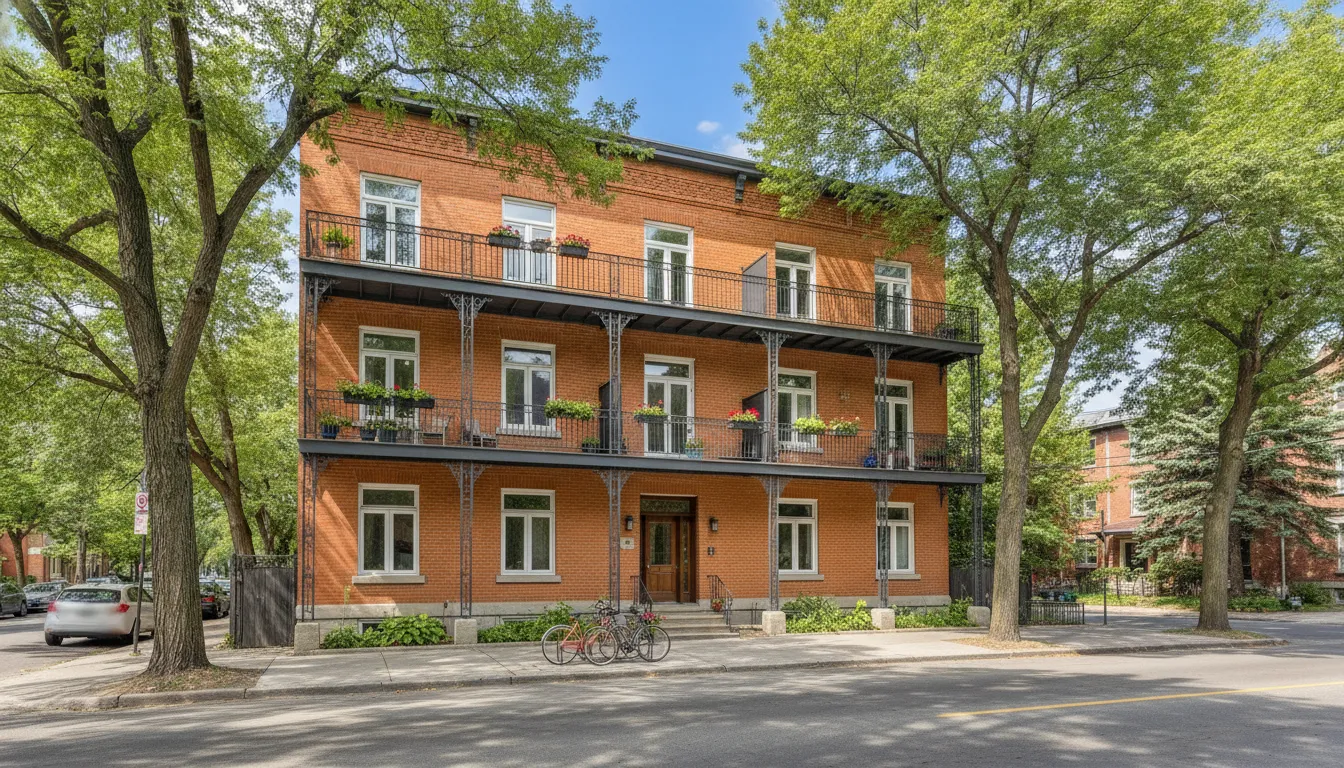
Well-maintained Montreal apartment building with clean brick facade and balconies

Rent Increases in Quebec: Notice Deadlines and the TAL Fixing Formula

Rent adjustments require disciplined timing and documentation. The process below is general guidance for property owners, not legal advice. For a multi-unit portfolio, maintain a separate file for each dwelling and each lease modification.

  1. Prepare a written notice. State the proposed rent and the other lease conditions being modified. Keep a copy of the notice, the current lease, delivery evidence, and the calculations supporting the proposed adjustment. The Tribunal administratif du logement (TAL) explains the applicable lease-modification process in its guidance on changing a condition of the lease: changing a condition of the lease.
  2. Serve the notice within the statutory window. For a lease of 12 months or longer, deliver the notice between three and six months before the lease ends. For a lease shorter than 12 months, the window is one to two months before the end date. Use a method that allows the date and receipt to be demonstrated later.
  3. Allow one month for the tenant’s response. The tenant may accept the modification, refuse it, or propose a discussion. Record the response and its date. If the tenant does not reply within one month, the modification is generally deemed accepted under the TAL process.
  4. File at the TAL if the tenant refuses. A refusal does not end the process, but the lessor must apply to the TAL within one month after receiving the refusal. Missing that deadline can prevent the requested modification from proceeding for that renewal period.
  5. Prepare the rent-fixing information and supporting records. When a TAL application is required, the lessor must notify each lessee named on the affected lease about the necessary information regarding rent fixing. The TAL requires proof of notification and supporting financial records. For a building with several affected rents, its instructions address completing one form per immovable, while notifying each relevant lessee: TAL rent-fixing information.
  6. Attend the hearing and let the TAL determine the amount. The Tribunal assesses the evidence under its regulatory formula. Relevant components can include changes in municipal and school taxes, insurance, operating costs, and eligible capital expenditures. The TAL’s 2025 communication reports an average adjustment granted of 3.8% for the 2015-2024 period: TAL 2025 rent-adjustment information. This average is historical context, not an automatic entitlement or a guaranteed result for a particular dwelling.

Accurate notices, delivery records, lease data, invoices, and tax documentation are central to a defensible application. Owners managing Quebec landlord tenant laws Montreal portfolios should treat each deadline as a compliance date and obtain qualified legal advice when the facts are disputed or unusually complex.

Lease Transfers and Subletting: Rules Under Bill 31

Lease assignment and subletting are not interchangeable arrangements. Both require careful documentation, timely notice, and a clear understanding of who remains responsible for the dwelling. The Tribunal administratif du logement explains the applicable notice and consent rules for Quebec residential leases.

Key differences between lease assignment and subletting in Quebec
Issue Lease assignment Subletting
Definition The original tenant transfers the lease to a new tenant and generally ends their role under the lease. The original tenant remains the lessee and rents the dwelling, or part of it, to a subtenant for a defined period.
Notice required Written notice must identify the proposed assignee and provide the date of the assignment. Written notice must identify the subtenant and state the anticipated sublease period.
Landlord’s right to refuse The landlord has 15 days to respond. Silence is deemed consent. Refusal must be based on a serious reason. The landlord may refuse for a serious reason. A timely written response is essential to avoid uncertainty.
Rent cap The transfer must be free. The tenant cannot demand consideration for assigning the lease. The sublet rent cannot exceed the rent paid by the original tenant.
Impact on renewal The assignee becomes the tenant under the existing lease and its renewal framework. If the sublet lasts more than 12 months, the landlord may have grounds to refuse renewal under the applicable rules.
Property manager discussing lease assignment terms with a tenant in a Montreal apartment
Well-maintained Montreal apartment building with clean brick facade and balconies

Why screening the proposed occupant matters

Screening is not a substitute for the statutory test, but it gives a landlord reliable information before accepting a new occupant. Identity, payment history, references, and the proposed use of the property can help identify legitimate concerns and support a consistent, documented decision. A refusal without a serious reason can create unnecessary dispute risk, while inadequate screening can expose the owner to avoidable operational and collection problems. PGK’s landlord and tenant screening services help property owners assess applicants within a structured management process.

For Montreal owners managing leases across multiple buildings, the practical requirement is disciplined administration. Record the notice, verify the proposed dates and parties, respond within the applicable period, and retain the supporting documentation. These controls help align day-to-day leasing decisions with Quebec’s civil-law framework.

Evictions and Repossession: Legal Grounds, Timelines, and Tenant Protections

Quebec landlords cannot remove a tenant by changing the locks, shutting off services, or issuing an informal demand to leave. An eviction or repossession must follow the applicable notice requirements and, where contested, receive authorization from the Tribunal administratif du logement (TAL). Self-help eviction is not a lawful substitute for a TAL order.

Eviction grounds and required notice

Common legal grounds include persistent or serious non-payment of rent, conduct that causes serious prejudice to the landlord or other occupants. And certain building changes, such as subdivision, enlargement, or a change of destination. A landlord may also seek repossession when the dwelling is genuinely required for the owner or a close family member. The relevant rules and notice process depend on the ground, the lease term, and the facts of the case. The TAL explains the repossession process. Including the requirement to notify the tenant six months before the end of a lease lasting 12 months or more, subject to applicable exceptions.

After receiving a repossession notice, the tenant generally has one month to refuse it. If the tenant refuses or does not accept the proposed arrangement, the landlord must apply to the TAL within the prescribed period. The landlord then needs to establish the legal basis for repossession and demonstrate that the request is made in good faith. Details are set out in the TAL repossession guidance.

Moratoriums and protections for older tenants

Quebec introduced a three-year moratorium, beginning June 6, 2024, on evictions carried out for subdivision, enlargement, or a change in the destination of a dwelling. The moratorium has defined exceptions, so owners must assess the property and the proposed work rather than assume that a notice is valid. The provincial guidance also provides additional protections for certain tenants aged 65 or older, including conditions related to occupancy, income, and length of residence. The Quebec government overview should be reviewed alongside the current legislation.

Indemnity and proof of good faith

When an eviction is authorized, the landlord may owe an indemnity ranging from three to 24 months of rent, depending on the circumstances and the tenant’s losses. The landlord also carries the burden of proving good faith. Misrepresenting the intended use of a dwelling can create additional liability. These rules, including the indemnity framework, appear in Quebec’s official 2024 legislation. For owners managing Montreal properties remotely or across multiple units, preserving notices, correspondence, payment records, inspection evidence, and a clear operational rationale is essential. Professional administration does not replace the TAL process, but it helps ensure that deadlines and documentation are handled with the care these proceedings require.

How Professional Property Management Keeps Montreal Landlords Compliant

Compliance is an operating discipline, not a document filed after a dispute begins. Professional management gives owners a system for identifying obligations, recording decisions, and meeting deadlines across the tenancy lifecycle.

Deadlines and notices require disciplined administration

Lease renewals, rent adjustments, assignments, and repossession matters each involve specific notice windows. A missed deadline can limit an owner’s options or create avoidable exposure. PGK tracks key dates, prepares notices, and retains delivery records so the file remains organized if a matter reaches the Tribunal administratif du logement.

For example, renewal and rent-increase notices must be prepared and delivered within the applicable period. Tenant responses also require prompt attention. A structured calendar allows the management team to assess the response, communicate with the owner, and take the next procedural step without relying on memory.

Tenant administration should support fair, consistent decisions

Tenant screening is another compliance-sensitive process. Consistent criteria, documented evaluations, and complete records help owners make defensible decisions. They also reduce the risk of refusing a lease assignment without a serious reason, which can create unnecessary conflict and delay.

PGK’s tenant management best practices provide a practical framework for communication, documentation, maintenance coordination, and issue escalation. The objective is not to make every tenancy identical. It is to ensure that comparable situations receive a consistent, well-supported response.

Property condition records protect the owner and the tenant

Quebec landlords must maintain the dwelling in habitable condition and make necessary repairs. The Civil Code of Quebec also addresses sanitation, safety, and peaceful enjoyment obligations. PGK maintains inspection, work-order, vendor, and completion records that show how issues were identified and addressed. See the Tribunal’s overview of lessor obligations for the governing framework.

Reliable records are especially important when a repair involves repeated visits, urgent work, or a disagreement about responsibility. They help separate verified conditions from assumptions, while giving owners a clear operational history for each property.

Bilingual reporting keeps owners informed

International investors, financial institutions, and trusts often need concise reporting that supports decisions from outside Montreal. PGK provides English and French communication, coordinated maintenance oversight, and reporting suited to professional ownership structures.

A 24-hour emergency-response capability also gives owners a clear escalation path when urgent incidents affect safety, access, or habitability. For a broader view of the operating model, review PGK’s complete Montreal property management guide.

Professional property inspector walking through a clean Montreal residential building common area

Frequently Asked Questions

What are red flags when screening prospective tenants?

Incomplete applications, inconsistent rental history, unverifiable income, missing references, and reluctance to provide required information warrant closer review. Apply the same documented screening criteria to every applicant, protect personal information, and avoid decisions based on prohibited discriminatory grounds. Strong records support consistent administration if a dispute later reaches the Tribunal administratif du logement.

How quickly can a landlord evict a tenant in Quebec?

There is no universal timetable. The process depends on the ground, the lease, required notices, tenant response, and whether a TAL application or hearing is necessary. A landlord cannot lawfully remove a tenant through self-help. Non-payment, serious prejudice, and other grounds follow distinct procedures, so owners should document the issue and verify the applicable process before acting.

What rights do landlords have to access a rental dwelling?

Access must be handled for a legitimate management, inspection, repair, or showing purpose while respecting the tenant’s peaceful enjoyment and privacy. Coordinate entry with the tenant and provide the notice required for the circumstances. The landlord’s broader duties include maintaining the dwelling and complying with safety, sanitation, and habitability requirements. TAL guidance explains these obligations.

Can a landlord repossess a dwelling occupied by a senior?

Sometimes, but additional protections may apply when the occupant is 65 or older. Eligibility depends on the tenant’s circumstances, including occupancy and income-related conditions. Quebec guidance identifies specific protections against repossession and eviction for qualifying seniors. Review the current requirements before serving notice, and obtain professional guidance when the facts are not clear. See Quebec’s official guidance.

What is the process for repossessing a dwelling in Quebec?

For a lease of 12 months or more, the owner generally gives written notice six months before the lease ends. The tenant has one month to reply. If the tenant refuses or does not accept the proposal. The landlord must apply to the TAL within one month, and the landlord carries the burden of proving good faith. TAL sets out the repossession procedure.

Ready to simplify rental property compliance?

Quebec lease rules involve precise notices, deadlines, and documentation. Professional management can help you handle these responsibilities with greater consistency while preserving a clear focus on your property and tenants.

Request a property management proposal from PGK Realty Services by contacting our team.

Choosing a property manager is not simply a matter of comparing monthly fees. The right partner should protect the performance of the asset, reduce operational exposure. And provide reporting that matches the owner’s responsibilities, whether the portfolio is residential, commercial, industrial, or held across borders.

To choose property management company Montreal owners can trust, evaluate local property-type expertise. The scope of day-to-day services, bilingual communication, reporting standards, emergency response, and the clarity of the proposed agreement. A credible evaluation should show how the manager will safeguard the property and support the owner’s long-term objectives.

PGK Realty Services has served property owners since 1986 and supports clients ranging from local investors to financial institutions and international owners. The decision begins with understanding what management actually includes, where responsibility sits, and which service model fits the property. From there, owners can compare providers on capability rather than promises.

What Does a Property Management Company in Montreal Actually Do?

A professional property manager acts as the operating partner for an asset, not simply as a rent collection intermediary. The scope may include tenant relations, maintenance, financial administration, inspections, and the coordination required to keep the property performing as intended. For an overview of property management services in Montreal, owners should assess both the services offered and the level of accountability attached to each one.

Tenant administration and leasing support

Tenant management begins before occupancy. A disciplined process can include application review, background checks, and income verification, helping owners evaluate whether prospective tenants are suitable for the property and its operating requirements. Tenant screening is one part of a wider responsibility that can include communication, lease administration, rent collection, issue resolution, and the consistent application of building policies.

The objective is not merely to fill a vacancy. It is to protect the quality of the tenancy, maintain dependable revenue administration, and provide a clear point of contact for occupants. For owners with residential, commercial, or industrial assets, the appropriate process will vary according to the property, lease structure, and risk profile.

Maintenance, inspections, and financial administration

Core management services commonly include maintenance coordination, bookkeeping, rent collection, tenant management, and property inspections. These functions are interconnected. Inspections can identify issues requiring attention, while maintenance coordination ensures that qualified vendors and necessary repairs are managed promptly. Bookkeeping and rent collection give owners a more reliable view of property income and operating activity.

For an owner, this coordination can remove a substantial amount of day-to-day administration. The purpose of professional management is to offload operational burdens while supporting the property’s long-term performance. Without requiring the owner to manage every tenant request, invoice, inspection, or repair personally. The precise scope should be defined in the management agreement, including reporting, approvals, emergency procedures, and vendor authorization limits.

Full-service versus partial management

Full-service management delegates most operational responsibilities to the management company. This arrangement may suit owners who are remote, managing a complex portfolio, or seeking a single accountable partner for tenant, maintenance, inspection, and financial functions.

Partial management assigns only selected responsibilities. An owner might retain bookkeeping or leasing while delegating maintenance coordination and tenant communications, for example. This can be appropriate when the owner has internal resources but needs professional support in specific areas. The stronger choice depends on the asset’s complexity, the owner’s capacity, and the level of oversight required, rather than on a generic service label.

Key Criteria for Choosing a Property Management Company in Montreal

The right management partner should be evaluated against the realities of your portfolio, not selected solely on the basis of a general service list or online ratings. Look for evidence of sustained experience, operational range, communication capability, and reporting standards that align with your ownership structure.

Established experience and operational continuity

Years in business are meaningful when they reflect consistent experience across changing market conditions, property requirements, and owner expectations. PGK Montreal has provided professional property management services since 1986, representing more than 38 years of experience. That history gives owners a practical benchmark when assessing whether a company has the depth to manage ongoing operational responsibilities rather than simply coordinate occasional tasks.

Ask how the company maintains continuity when dealing with maintenance, tenant matters, inspections, bookkeeping, and rent collection. A mature management operation should be able to explain its processes clearly and show how responsibilities are handled over the life of the engagement.

Bilingual communication and local accountability

Montreal property management requires communication that works for owners, tenants, contractors, and local stakeholders. Fully bilingual English and French service can support clearer exchanges and reduce avoidable friction in day-to-day operations. This is particularly important for owners who live outside Quebec or who expect consistent communication across a portfolio.

Local knowledge should also extend beyond residential rentals. A qualified company should understand the differing operational demands of apartment buildings, condominiums, commercial properties, and industrial assets. Owners evaluating multi-unit portfolios can review PGK’s multi-family property management approach, while industrial owners should consider the distinct requirements described in its guide to industrial property management.

Institutional and international capability

Financial institutions, trusts, and other sophisticated owners need more than routine administration. They require fiduciary-grade management standards, transparent professional reporting, and disciplined oversight that supports informed decisions. Ask to see examples of the reporting structure, approval controls, and escalation procedures the company uses, without relying on unsupported claims or generic assurances.

International investors also benefit from a manager experienced in serving owners from different jurisdictions. PGK Montreal has experience with property owners from France, Germany, England, Hong Kong, and the Bahamas. That background is relevant when an owner needs dependable local execution alongside communication and compliance awareness suited to cross-border ownership.

What Questions Should You Ask Before Signing a Property Management Agreement?

Once you have assessed a manager’s experience, property-type expertise, communication standards, and reporting capabilities, move from general impressions to specific operating questions. The answers should reveal whether the proposed relationship is genuinely aligned with your asset, ownership structure, and expectations.

How will you manage this property type?

Ask whether the company routinely manages properties comparable to yours, including multi-unit residential buildings, condominiums, offices, commercial properties, or industrial assets. Request an explanation of the operational issues it expects to encounter and how those issues will be reported and resolved. A company that understands your property type should be able to discuss tenant relations, inspections. Maintenance coordination, bookkeeping, and rent collection in concrete terms rather than offering a generic service description.

What is included in the management scope?

Clarify whether the proposal covers complete management or only selected services. Ask who handles tenant screening, leasing, rent collection, inspections, bookkeeping, maintenance coordination, and communication with contractors. Also confirm what remains your responsibility. This distinction is important when comparing providers because a lower apparent fee may reflect a narrower scope, not better value.

Ask specifically how maintenance emergencies are handled. Who receives calls outside regular business hours? What authority does the manager have to approve urgent work, and when will you be notified? Established protocols matter because regular inspections and timely maintenance can help identify problems before they become larger liabilities. Property owners should also confirm how work orders, invoices, and completion records are documented.

How will performance, fees, and communication be documented?

Request a sample reporting package or a clear description of the reports you will receive. Institutional owners and fiduciaries may require more than a basic income-and-expense summary, including consistent documentation and professional reporting standards.

Ask how fees are structured, which services or expenses are additional, and how contractors are selected. Professional property management pricing should be based on the property’s requirements and the agreed scope, so expect a customized proposal rather than a universal fixed rate. Compare the proposed cost with the operational coverage, oversight, risk control, and long-term value it provides.

Can you support my ownership structure and due diligence?

Ask for references or relevant examples involving similar properties, while recognizing that confidential client information may limit what can be disclosed. If you are an international owner, confirm how the company supports cross-border communication, documentation, and coordination. Bilingual English and French service may also be important for tenants, suppliers, and local stakeholders.

Finally, do not rely on online reviews alone. Due diligence should also examine local market knowledge, financial planning, maintenance protocols, and the company’s ability to protect the asset operationally. These questions turn the evaluation criteria into evidence you can assess before signing.

Source: property management due diligence guidance.

Comparing Property Management Fee Structures: What to Look For

Fee structures should be assessed alongside the operational coverage they purchase. A lower apparent fee may leave the owner coordinating tenants, maintenance, inspections, or financial administration independently. A suitable arrangement reflects the property’s complexity, the owner’s responsibilities, and the level of oversight required.

How to compare property management arrangements
Arrangement Scope of services Cost model Best suited to
Full-service management Broad operational coverage, potentially including tenant management, rent collection, bookkeeping, maintenance coordination, inspections, and leasing. Customized proposal based on the asset, service scope, and operating requirements. Owners seeking comprehensive support for apartment buildings, condominiums, commercial properties, or complex portfolios.
Partial management Selected responsibilities, such as leasing, inspections, maintenance coordination, or financial administration, while the owner retains other functions. Customized proposal for the defined responsibilities. The agreement should clearly identify inclusions, exclusions, and additional services. Owners with internal capacity or established vendors who need targeted professional support.
Fixed-rate offer May appear straightforward, but a standard rate can obscure differences in property size, condition, tenant needs, and reporting expectations. Advertised as a flat amount or formula. Treat broad promises cautiously unless the scope is fully documented. No property type should be assumed to fit without a detailed assessment and written scope.

Professional management pricing should be proposal-based rather than presented as a universal rate. Ask how the proposal accounts for the number and type of units, commercial or industrial requirements, leasing activity, reporting, emergency response, inspections, and owner involvement. The distinction between complete vs partial property management is useful when defining that scope before comparing proposals.

Also examine value beyond the headline fee. PGK offers a free professional insurance evaluation, with potential savings of up to 40%, subject to the property and policy review. This type of service should be evaluated as part of the overall relationship, not treated as a substitute for clear deliverables.

Finally, compare the proposed fee with the long-term return of professional oversight. Relevant considerations include avoided operational errors, better maintenance planning, tenant stability, risk control, and the owner’s recovered time. A sound decision weighs total asset performance and accountability, not simply the lowest initial quote.

Red Flags When Vetting Property Managers in Montreal

The wrong management relationship can expose an owner to avoidable operational, financial, and compliance risk. When you choose a property management company in Montreal, treat the following shortcomings as deal-breakers rather than minor inconveniences.

No meaningful Montreal market knowledge

A company that cannot explain how it manages properties across the Greater Montreal market may struggle with tenant expectations. Maintenance networks, leasing decisions, and the practical differences between residential, commercial, and industrial assets. Generic promises about service are not a substitute for demonstrated local judgment. Ask for concrete examples of how the company approaches your property type and municipality.

Insufficient bilingual capacity

Property management in Montreal requires clear communication with owners, tenants, suppliers, professionals, and public bodies in both English and French. If the proposed team cannot provide dependable bilingual service, misunderstandings can affect notices, maintenance coordination, leasing, and owner reporting. Bilingual capability should be established at the operating level, not presented as an occasional referral to another contact.

No institutional-grade reporting or fiduciary discipline

Owners managing a substantial portfolio, a trust, or institutional capital should be wary of a manager that cannot explain its reporting standards. Financial institutions and trusts may require fiduciary-grade management and reporting standards, including clear financial records, documented approvals, and reliable visibility into property performance. If reports are vague, delayed, or built around unsupported summaries, look elsewhere. This is not an administrative preference. It is a control necessary for responsible asset oversight.

Limited international and emergency capability

International investors need a management partner familiar with cross-border requirements and the expectations of owners who are not on site. A company unable to support that relationship may leave critical decisions to the owner despite being engaged for operational relief. Similarly, limited emergency response capability is a serious warning sign for multi-unit and commercial properties. Ask who responds outside normal hours, how incidents are documented, and what escalation procedures are in place.

Opaque fees or a narrow view of risk

Unclear charges, unexplained exclusions, and a refusal to provide a customized proposal make it difficult to compare value. Owners should also question a manager that cannot discuss insurance evaluation, maintenance protocols, or preventive inspections. Due diligence should go beyond online reviews and examine local knowledge, financial planning. And maintenance practices, as recommended by the City of Columbus guidance on evaluating property managers (reviewing a property manager beyond online reviews). A polished website cannot compensate for weak controls, poor communication, or an inability to protect the asset in practice.

Why Experience and Local Market Knowledge Matter in Property Management

Montreal property ownership involves more than coordinating routine maintenance. A management partner must understand the operating realities of residential, commercial, and industrial buildings. Communicate effectively with tenants and stakeholders, and make decisions that protect the asset over time. Experience matters because it gives those decisions context.

PGK Realty Services has served property owners since 1986, representing more than 38 years of experience in the Montreal market. That longevity is relevant when evaluating a manager because it demonstrates familiarity with the recurring demands of ownership. From tenant relations and maintenance coordination to bookkeeping, inspections, and rent collection. It also gives owners a more informed basis for assessing whether a company can manage their particular property type and operating requirements.

Local communication supports faster, clearer decisions

Montreal’s business and residential environment requires practical communication across English and French. PGK provides bilingual service, helping owners, tenants, contractors, and local stakeholders communicate with fewer misunderstandings. For owners who live outside Quebec or outside Canada, that capability can be especially important when they need reliable information without managing every local interaction themselves.

Local knowledge also has a direct operational dimension. A manager familiar with Greater Montreal can coordinate the right response for a multi-unit building, commercial property, or industrial site rather than applying a generic process. For owners comparing companies, the useful question is not simply how long a firm has existed. But how that experience translates into consistent oversight for the asset being considered.

Operational readiness protects value between routine decisions

Property issues do not follow office hours. PGK has 24-hour superintendent or emergency-response capability, an important safeguard when an urgent building problem threatens occupants, operations, or the condition of the property. Emergency readiness should be assessed alongside regular inspection and maintenance protocols, because the combination supports both tenant confidence and long-term asset protection.

Experience can also create value outside day-to-day management. PGK offers a free professional insurance evaluation, with documented potential savings of up to 40%. Savings are not guaranteed for every property, but an evaluation can identify whether the current coverage and premium structure deserve closer review.

Reporting must match the owner’s obligations

Owners with complex portfolios, fiduciary responsibilities, or external stakeholders need more than basic updates. PGK serves financial institutions and trusts that require fiduciary-grade management and reporting. It also supports international investors from France, Germany, England, Hong Kong, and the Bahamas, where cross-border expectations and multi-jurisdictional considerations can influence oversight.

Owners assessing institutional property management should therefore examine the quality of reporting, escalation procedures, and accountability offered before signing an agreement. The strongest choice is the company whose local execution, communication standards, emergency capability, and reporting discipline align with the property’s risk profile and the owner’s expectations.

Frequently Asked Questions

How do I choose the best property management company in Montreal?

Start by matching the company to your property type, ownership structure, and reporting requirements. Compare its experience with residential, commercial, or industrial assets, maintenance and inspection protocols, tenant-management process, financial reporting, bilingual service, emergency response, and communication standards. Ask for a proposal that clearly defines responsibilities, decision-making authority, service levels, and what is included.

How much does property management cost in Montreal?

There is no responsible universal rate. Fees should reflect the property type, size, operating complexity, occupancy needs, and scope of service. Request an itemized proposal and confirm which services are included, which costs are additional, how maintenance approvals work, and whether the arrangement is full-service or partial. Evaluate the total cost against the operational time, risk control, and asset protection the manager provides rather than comparing percentages alone.

What should I ask before signing a property management agreement?

Ask who will manage the account day to day, how quickly urgent issues are handled. How tenants are screened, how inspections are documented, and how rent collection and bookkeeping are reported. Also clarify contract length, termination terms, owner approvals, vendor selection, insurance coordination, and the process for reviewing performance. Due diligence should extend beyond online reviews to local market knowledge, maintenance practices, and financial planning capabilities, as recommended by the City of Columbus. Source.

What are the red flags when evaluating a property manager?

Be cautious when a company cannot explain its reporting, avoids transparent fee disclosures, lacks a defined maintenance escalation process, or has limited knowledge of Montreal property operations. For institutional owners, trusts, and international investors, an inability to provide professional reporting or address cross-border requirements is a material concern. Vague responsibilities and pressure to sign before reviewing the proposal are also reasons to pause.

Ready to Request a Property Management Proposal?

A tailored proposal helps you assess whether a management approach aligns with your property type, operating requirements, and ownership objectives. PGK Montreal can discuss your priorities and outline the scope of support appropriate for your portfolio. To request a property management proposal, call PGK Montreal at 514-931-5111 and speak with the team about your needs.