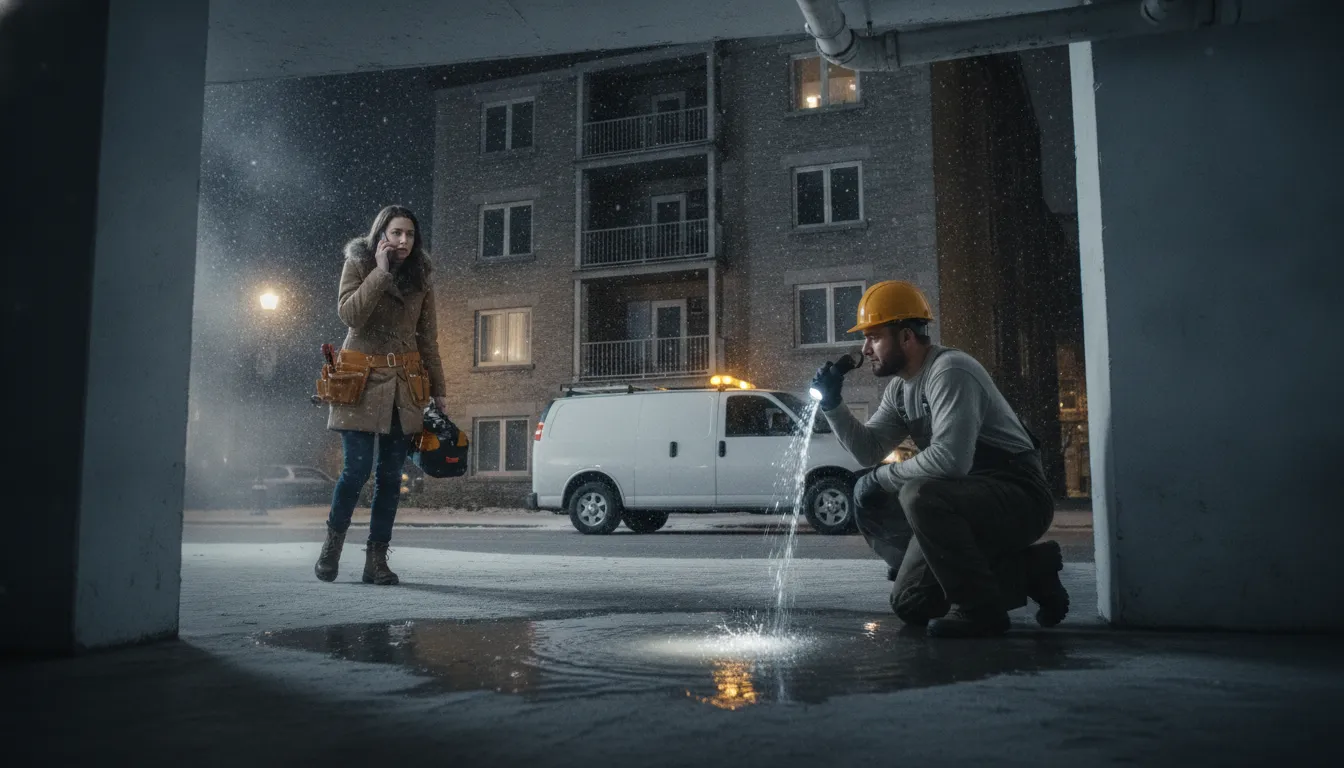
A burst pipe at 2 a.m., an electrical failure after a storm, or a break-in can place a property, its occupants, and your investment at immediate risk. The first response must be practical and coordinated: secure the site, limit further damage, and bring the right professionals into action without delay.
Emergency property management montreal services provide around-the-clock coordination when a building faces urgent damage or a safety threat. The response typically includes immediate care to limit losses, vendor dispatch, damage assessment, and clear communication with owners and occupants. For Greater Montreal properties, bilingual support and established maintenance systems add operational continuity when it matters most.
Professional emergency management is not limited to repairing the visible problem. It connects urgent intervention with the broader responsibilities of keeping a property safe, secure, functional, and properly maintained. The distinction begins with understanding which situations require immediate action and why.
Emergency Property Management Montreal: What Qualifies as a Property Emergency in Montreal?
A property emergency is an incident that threatens occupant safety, the building’s structure, essential services, or the security of the premises unless someone intervenes promptly. In Montreal, that can include a burst pipe, active water infiltration, fire or smoke damage. A serious electrical failure, a break-in, or storm damage that has left the building exposed.
The practical test is not whether the repair is inconvenient. It is whether waiting could materially increase the risk or the cost. Water running through ceilings, for example, calls for immediate action to isolate the source, protect occupants, and limit damage. A failed heating system during freezing weather may also require urgent attention, particularly in a vacant property. Montreal’s building-maintenance guidance notes that owners must prevent deterioration and maintain essential systems, including plumbing and heating. The city also emphasizes that regular inspection and protection against water and moisture can prevent major restoration work. Montreal’s building-maintenance guidance for owners provides the applicable framework.
When owners must act immediately
Immediate intervention is appropriate when there is an active hazard or a reasonable prospect of rapid escalation. Examples include an uncontrolled leak, sewage backup, exposed wiring, loss of heat during severe cold, structural instability, a fire, or unauthorized entry while the property remains unsecured. The first priority is life safety. Occupants should leave an unsafe area and contact emergency services when necessary. The next steps are to shut off utilities if it is safe to do so, secure the premises, and arrange qualified assistance.
When an issue can wait until morning
A routine maintenance request does not normally become an overnight emergency simply because it occurs outside business hours. A dripping faucet with no risk of flooding, a cosmetic defect, a non-urgent appliance issue. Or a minor repair that does not affect safety, security, or essential services can generally be documented and scheduled during regular service hours. The distinction should still be assessed by someone familiar with the property, since a small symptom can conceal a larger failure.
For owners, reliable emergency property management in Montreal means having a clear escalation process rather than treating every request identically. Prompt triage protects residents, limits avoidable damage, and supports the owner’s maintenance obligations without turning ordinary repairs into unnecessary emergency callouts.
Common Property Emergencies Montreal Property Owners Face
Property emergencies rarely remain isolated to one room or one tenant. A failed system can interrupt operations, expose occupants to harm, damage building components, and create urgent insurance and communication requirements. Disaster recovery providers identify burst pipes, fire, and storm damage among the incidents affecting homes, businesses, and industrial complexes in Montreal and the surrounding region. BELFOR Montreal describes emergency recovery as essential after both natural and man-made disasters.
| Emergency Type | Primary Risk | Immediate Action | Typical Trades Required |
|---|---|---|---|
| Burst pipe / water leak | Structural damage, mold, electrical hazard | Shut off water, extract standing water, dry affected areas | Plumber, water restoration contractor |
| Fire / smoke damage | Life safety, structural compromise, toxic residue | Evacuate, contact fire services, restrict access | Fire restoration, structural engineer |
| Break-in / vandalism | Security breach, weather exposure, theft | Secure openings, assess damage, notify authorities | Locksmith, security contractor, glazier |
| Electrical failure | Fire risk, loss of essential services, occupant hazard | Isolate affected circuit, restrict unsafe areas, arrange qualified assessment | Licensed electrician |
| Storm / weather damage | Water entry, roof failure, falling debris | Temporary roof cover, drainage, site safety | Roofer, restoration contractor, arborist |
Water and plumbing failures
Burst pipes, failed water heaters, sewer backups, and concealed leaks can spread through walls, ceilings, floors, and mechanical spaces before the source is identified. Beyond visible damage, persistent moisture can affect insulation, finishes, electrical components, and indoor conditions. In a multi-unit or commercial property, a single plumbing failure can also disrupt several occupants or business operations. Rapid shutoff, extraction, drying, and documented assessment are necessary to prevent a manageable incident from becoming a major restoration project.
Fire and smoke damage
A fire creates immediate life-safety concerns, but the consequences continue after the flames are extinguished. Smoke residue, soot, water used for suppression, and compromised building systems may make areas unsafe or unusable. Owners need coordinated access control, emergency repairs, professional assessment, and clear communication with tenants, insurers, contractors, and other stakeholders. The response must protect people first while preserving the information needed for recovery and long-term remediation.
Break-ins and vandalism
Forced entry, broken doors, damaged windows, theft, and vandalism leave a property exposed to further intrusion and weather-related damage. An emergency response should secure vulnerable openings, assess affected areas, preserve relevant evidence, and determine whether utilities or safety systems have been compromised. For industrial sites and commercial facilities, the operational impact may extend to equipment, inventory, access controls, and compliance-sensitive areas. Effective industrial property management includes maintaining a clear escalation path for these situations.
Electrical failures
Power loss, electrical arcing, burning odours, and repeated breaker trips can signal a serious hazard rather than a routine maintenance request. Occupants may lose heat, lighting, refrigeration, security systems, elevators, or essential equipment. Unqualified intervention can increase the risk of injury or fire, so the priority is to restrict unsafe areas. Coordinate a qualified electrical assessment, and maintain safe access until the system is restored.
Storm and severe weather damage
Heavy rain, high winds, freezing precipitation, and rapid weather changes can damage roofs, cladding, windows, drainage systems, and trees. Water entry may continue long after the storm has passed, while fallen materials can restrict access or create hazards around the property. Emergency property management in Montreal requires a practical response that stabilizes the site, limits secondary damage, and coordinates permanent repairs once conditions are safe.
Why 24/7 Emergency Response Matters for Montreal Properties
Property emergencies rarely respect office hours. A burst pipe, electrical failure, fire, break-in, or severe weather event can worsen quickly when no one is available to assess the situation and coordinate the first response. For owners of residential, commercial, and industrial properties, after-hours capability is therefore a risk-management function, not simply a convenience.
Early action limits the scope of damage
The first response often determines whether an incident remains localized or becomes a broader restoration project. Shutting off water, securing a damaged opening, isolating an electrical hazard, or arranging temporary protection can reduce exposure before a specialist completes the repair. Industry guidance on emergency property operations emphasizes immediate care to limit damage, followed by a detailed assessment to support a lasting resolution. This two-stage approach gives owners a clearer path from stabilization to permanent work.
That timing can also influence repair costs. Water that remains uncontrolled may spread through finishes, mechanical areas, and adjacent units. An unsecured property may face further vandalism or unauthorized access. Prompt intervention does not eliminate every cost, but it can prevent a contained failure from affecting more of the building and disrupting more tenants.
Safety and continuity require an accountable contact
Tenants need a clear response when a building is unsafe, inaccessible, or without essential services. A qualified emergency contact can arrange appropriate vendors, communicate practical instructions, document the incident, and escalate issues that require immediate attention. This is especially important for owners who are outside Montreal or managing a larger portfolio and cannot attend the property personally.
PGK Realty Services provides 24-hour superintendent and emergency response capability for the properties it manages. That support forms part of a broader system of comprehensive property maintenance management, helping owners address urgent issues while maintaining oversight of routine operations. The objective is straightforward: protect people, contain the incident, and preserve the building’s condition and value.
For Montreal property owners, a dependable response structure also supports better records for follow-up repairs, insurance coordination, and future prevention. It turns an unpredictable event into a managed operational process rather than leaving tenants and owners to improvise under pressure.
How Professional Emergency Property Management Works
A reliable emergency response is a controlled sequence, not an improvised reaction. The objective is to protect people first, stabilize the property, document what occurred, and restore normal operations with as little disruption as possible. A professional process typically follows these steps:
- Receive and triage the emergency call. The response begins with a clear account of what has happened, where it is occurring, and whether anyone faces an immediate safety risk. The manager identifies the appropriate priority, confirms access details, and determines whether tenants, occupants, municipal services, or emergency responders must be contacted first.
- Dispatch the appropriate vendor or responder. Based on the incident, the property manager coordinates a qualified plumber, electrician, restoration contractor, locksmith, security professional, or other specialist. The goal is to send the right expertise promptly rather than delay the intervention with an unsuitable repair.
- Provide immediate care to limit damage. The first on-site intervention focuses on stabilization. This may include shutting off water, securing a compromised entrance, isolating an electrical hazard, removing standing water, protecting exposed areas, or arranging temporary measures. This initial-analysis and immediate-care framework is recognized as central to limiting damage during an emergency.
- Complete a detailed assessment. Once the immediate risk is controlled, the manager and responding professionals assess the affected systems, materials, units, and common areas. They document visible damage, identify likely causes, determine whether adjacent areas are affected, and establish the work required for a durable resolution. Photographs, service reports, and timelines create a useful record for owners and insurers.
- Communicate with tenants and occupants. Clear, timely communication helps maintain safety and confidence. Occupants should understand what happened, which areas are restricted, whether utilities or access have changed, and what they should do next. For a bilingual Montreal portfolio, communication can be provided in English or French as appropriate.
- Coordinate with insurers and stakeholders. The property manager organizes relevant documentation and shares the incident details with the owner, insurer, adjuster, lender, trustee, or other authorized stakeholder. This coordination reduces administrative friction while keeping decisions aligned with the property’s operational and financial requirements.
- Manage follow-up repairs and closeout. Emergency stabilization is only the beginning. The manager tracks restoration, permits or specialist work when required, tenant updates, invoices, and final inspections. Owners benefit from a single point of coordination through the return to safe, functional operations. For a broader view of professional emergency property management and full-service oversight, review PGK Montreal’s complete owner guide.
Winter-Specific Emergency Property Management in Montreal
Montreal winters create a sequence of risks that can escalate quickly. Freeze-thaw cycles place pressure on plumbing, roof assemblies, masonry, and drainage points. A minor weakness can become a burst pipe, an interior leak, or extensive water damage when temperatures fall and then rise sharply.
Freeze-thaw damage, ice dams, and snow load
When water enters a vulnerable roof edge or wall assembly, repeated freezing and thawing can enlarge cracks and allow moisture to travel into occupied spaces. Ice dams can obstruct drainage at the roofline, directing meltwater beneath roofing materials rather than away from the building. These incidents require prompt isolation, inspection, and coordination with qualified trades before damage spreads into ceilings, insulation, electrical systems, or finished areas.
Heavy snow accumulation introduces a separate concern. Flat roofs, canopies, balconies, and other load-sensitive structures should be monitored during significant snowfall. Signs such as unusual deflection, cracking, sticking doors, or new water intrusion warrant immediate escalation. Emergency property management should prioritize life safety, restrict access where appropriate, and arrange a professional assessment rather than treating visible symptoms as a routine maintenance request.
Heating failures in vacant buildings
A vacant unit or building is particularly exposed because a failure may go unnoticed until pipes freeze or the building envelope sustains damage. Montreal guidance identifies non-functioning heating systems that expose a building to freezing and thawing as a significant maintenance risk. The same guidance also warns that water infiltration or leaks can cause substantial damage to the building envelope or structure. Property owners should therefore maintain heat in vacant spaces, monitor systems, and respond quickly when temperatures or equipment performance indicate a problem.
Regular site checks are an important control, not an administrative formality. PGK Realty Services can coordinate a 24-hour vacant property inspection protocol to help identify heating interruptions, leaks, roof concerns, and other winter hazards before they become larger claims or restoration projects. Montreal’s building-maintenance obligations also prohibit allowing a building to deteriorate, including failures involving plumbing and heating systems. See the City of Montreal’s owner obligations for the applicable guidance.
How to Find Reliable Emergency Property Management in Montreal
When evaluating an emergency property management provider, look beyond a general promise of responsiveness. A credible partner should demonstrate the people, procedures, and local relationships required to protect a building when conditions are changing by the hour.
- Genuine after-hours coverage: Confirm that emergency support extends through nights, weekends, and holidays. A voicemail answered the next morning is not a 24-hour response model. Professional emergency services commonly use a dedicated 24/7 hotline to support prompt intervention and help mitigate damage from building failures.
- Montreal-based operational knowledge: The provider should understand Greater Montreal buildings, seasonal risks, tenant expectations. And the practical realities of coordinating plumbers, electricians, restoration specialists, security professionals, and other trades at short notice. A proven local vendor network matters more than a directory of untested contacts.
- Bilingual communication: English and French capability should be available for owners, tenants, contractors, insurers, and public authorities. Clear communication reduces delay and prevents critical details from being lost during a stressful incident.
- Documented response protocols: Ask how the provider handles the first call, immediate safety measures, vendor dispatch, damage assessment, tenant communication, insurance coordination, and follow-up work. Disaster recovery providers identify burst pipes, fires, and storms among the events requiring emergency intervention in Montreal (BELFOR Montreal), but a property manager must also coordinate the broader operational response.
- Institutional-grade accountability: Owners of substantial or multi-property portfolios should expect clear reporting, escalation procedures, and records of what happened, what was authorized, and what remains outstanding. Experience serving financial institutions and sophisticated investors is a meaningful differentiator.
PGK Realty Services reflects these criteria through bilingual service, established maintenance systems, more than 35 years of Montreal experience, and superintendent and emergency-response capability available around the clock. The objective is not merely to send a contractor. It is to give owners a controlled response that protects occupants, limits disruption, and preserves confidence in the asset.
Before signing, ask for the emergency number, escalation path, service area, reporting process, and examples of how after-hours incidents are managed. Those answers will reveal whether the provider is equipped for a real crisis or simply markets routine property management under an emergency label.
Frequently Asked Questions
What qualifies as a property management emergency?
An emergency threatens safety, security, the building structure, or essential services. Burst pipes, fire or smoke damage, break-ins, major electrical failures, flooding, and storm damage require immediate coordination. A dripping faucet or routine repair is urgent only when it could quickly become a larger loss.
How quickly should an emergency property manager respond?
The manager should acknowledge the call immediately, assess the risk, and coordinate the appropriate response without waiting for regular business hours. Professional emergency services commonly operate through a 24/7 hotline to support prompt intervention and limit damage.
What happens after I report a building emergency?
The first priorities are protecting people, securing the property, and limiting further damage. The manager coordinates immediate care, dispatches qualified trade or restoration support, documents conditions, and arranges a detailed assessment for the longer-term repair. This sequence reflects the emergency process described by Gestion Habitats, which separates immediate damage control from subsequent assessment and resolution.
How do I choose emergency property management in Montreal?
Look for documented after-hours coverage, bilingual communication, local vendor coordination, clear tenant and owner reporting, and experience with residential, commercial, or industrial buildings similar to yours. Ask how the manager handles access, insurance documentation, vacant properties, and follow-up repairs. Montreal owners should also confirm that the service understands local maintenance obligations, including the requirement to prevent building deterioration under municipal by-law 23-016: Montreal’s owner obligations.
Contact us to discuss emergency property management
A clear emergency response plan can help protect residents, reduce disruption, and keep property decisions coordinated when an incident occurs. PGK Montreal can review your requirements and outline a management approach suited to your portfolio. Request a proposal through the contact page to start the conversation.